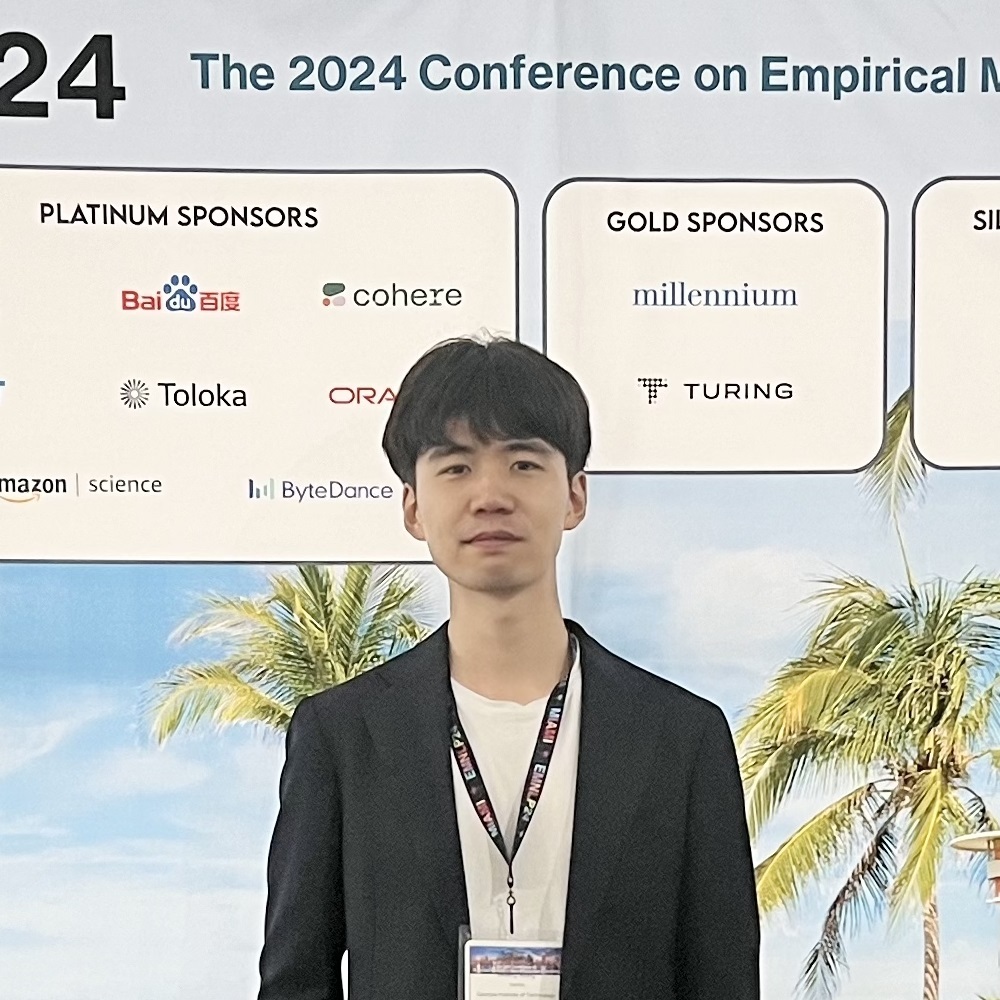
I am an Applied Scientist at AWS, working on agentic reinforcement learning. I received my Ph.D. in Machine Learning from the Georgia Institute of Technology.
My research focuses on improving long-horizon reasoning and decision-making in large language models. I study post-training and system design for LLM agents, with an emphasis on deliberate reasoning and planning, adaptive retrieval, long-context modeling, and scalable agentic systems.
News
- 2026.08 One paper accepted to EMNLP 2026.
- 2026.07 I joined AWS as an Applied Scientist.
- 2026.06 I received the Spring 2026 CSIP Outstanding Research Award at Georgia Tech.
- 2026.03 Two papers accepted to ICML 2026, including one Spotlight.
- 2026.03 One paper accepted to ICLR 2026 Workshop on Scaling Post-training for LLMs.
- 2026.02 One paper accepted to ICLR 2026.
- 2025.12 I will be attending NeurIPS 2025. See you at San Diego.
Featured Projects
Long-Horizon LLM Agents
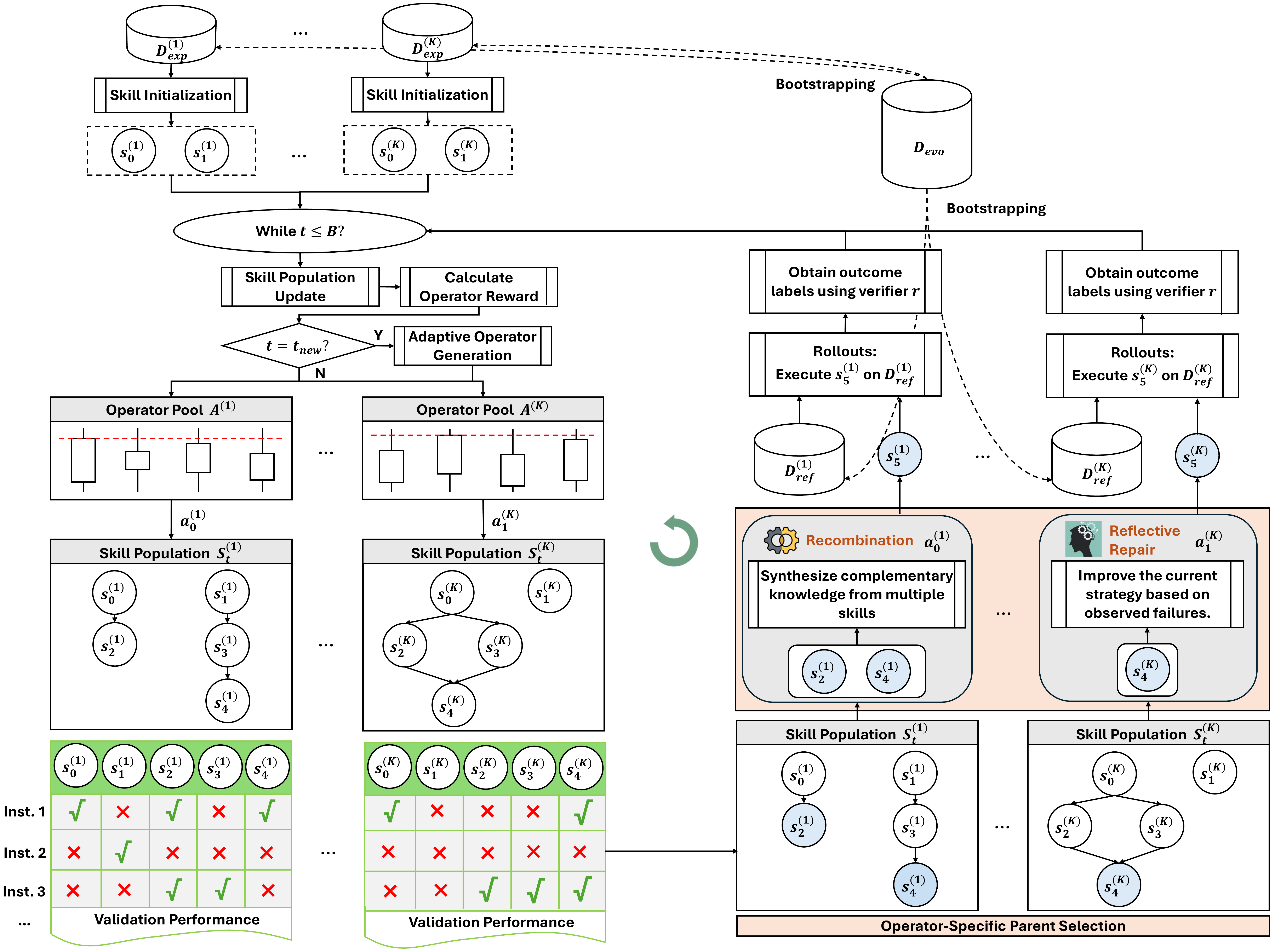
DIVE: Unlocking Self-Improvement in Frozen Language Models Through Diversity-Driven Skill Evolution
Siheng Xiong, Ali Payani, Oguzhan Gungordu, Faramarz Fekri
DIVE enables frozen LLMs to improve from experience without parameter updates by evolving reusable natural-language skills. By maintaining diverse skill populations and selecting complementary skills, DIVE achieves strong and transferable self-improvement across reasoning tasks and model families.
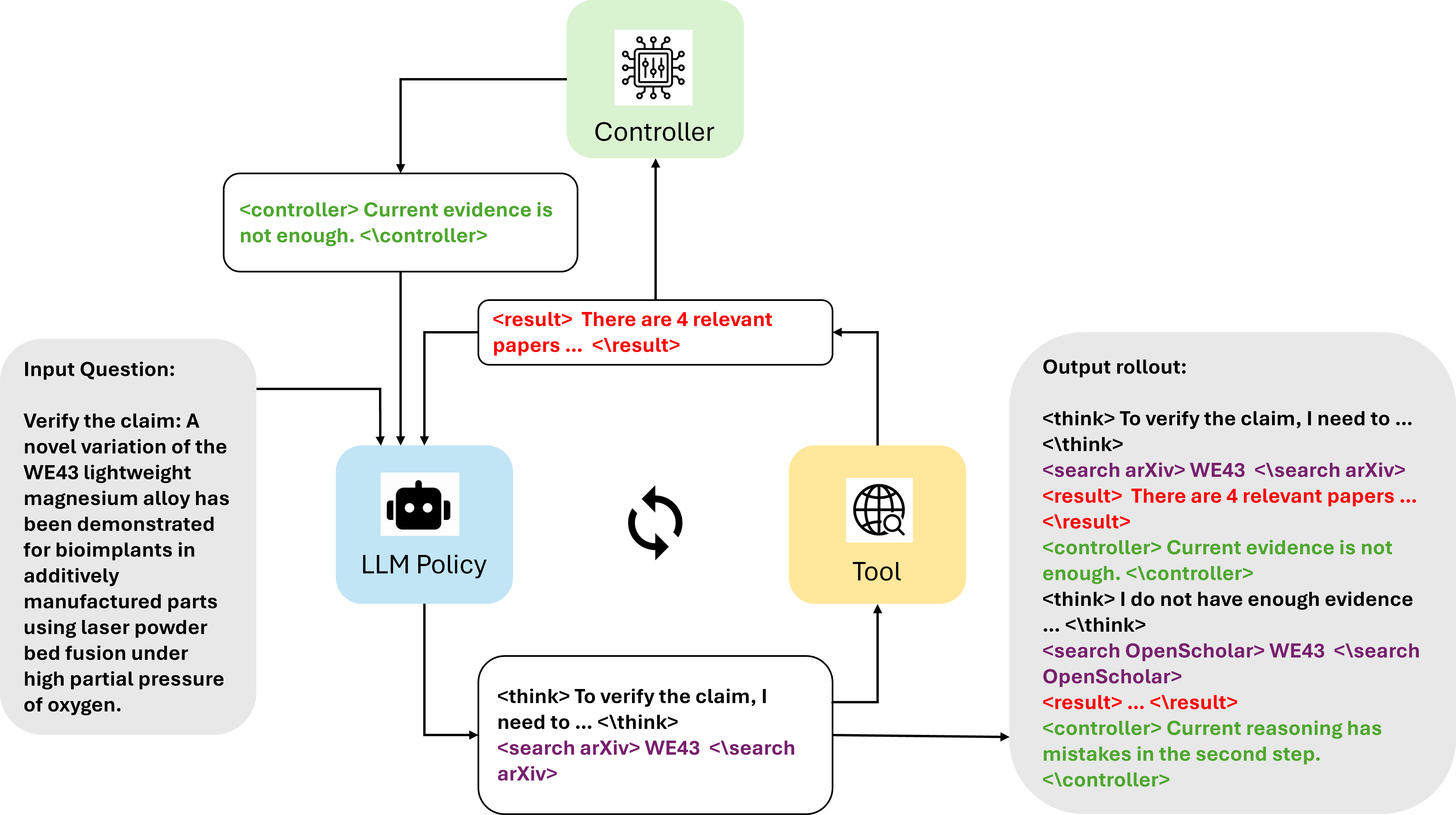
Adaptive Information Control for Search-Augmented LLM Reasoning
Siheng Xiong, Oguzhan Gungordu, James C. Kerce, Faramarz Fekri
DeepControl is a post-training framework for search-augmented LLM agents that adaptively controls retrieval and expansion based on the agent’s reasoning state, improving long-horizon reasoning performance across diverse benchmarks.
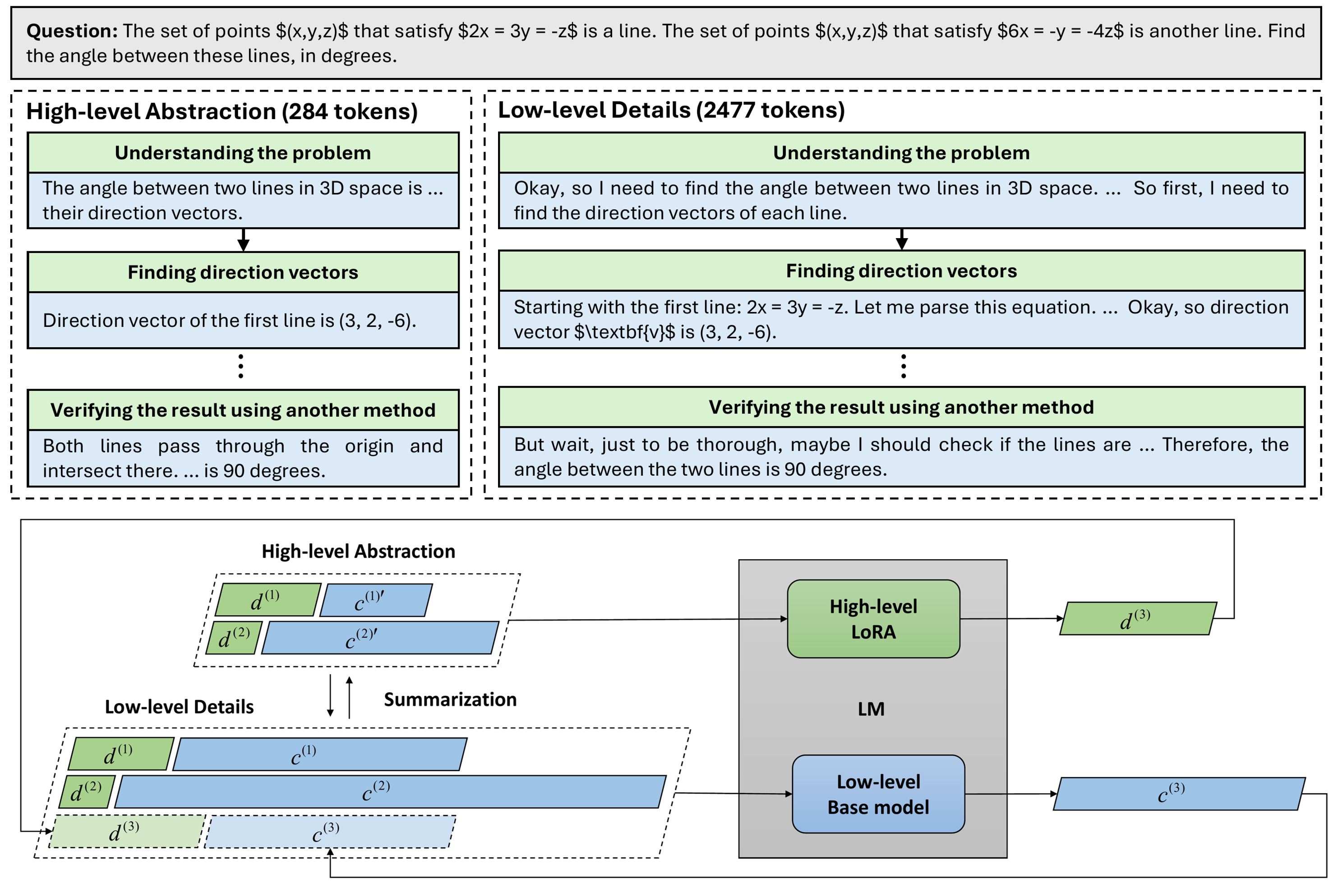
Enhancing Language Model Reasoning with Structured Multi-Level Modeling
Siheng Xiong, Ali Payani, Faramarz Fekri
MLR is a lightweight planner-executor framework for long-horizon reasoning, combining multi-level decomposition with scalable step-level supervision to improve both accuracy and training stability.
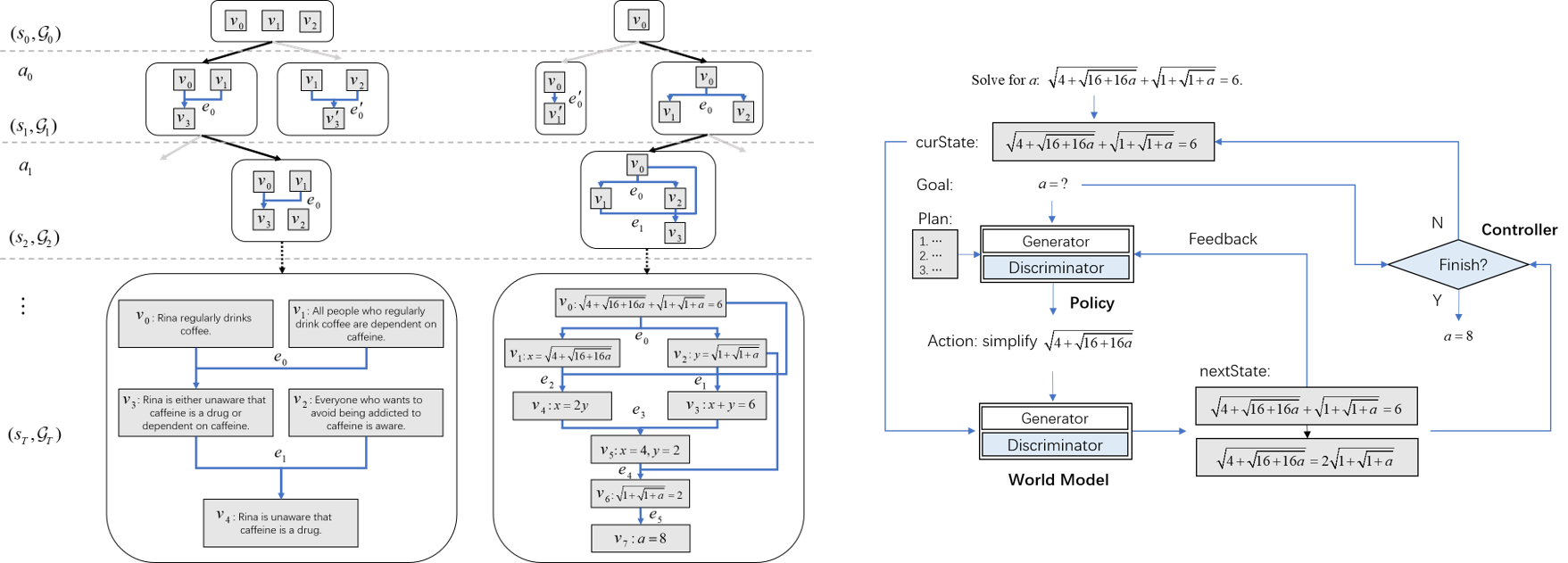
Deliberate Reasoning in Language Models as Structure-Aware Planning with an Accurate World Model
Siheng Xiong, Ali Payani, Yuan Yang, Faramarz Fekri
SWAP frames multi-step reasoning as structure-aware planning, where a world model predicts structured future states to guide action selection.
Long-Context and Memory Systems
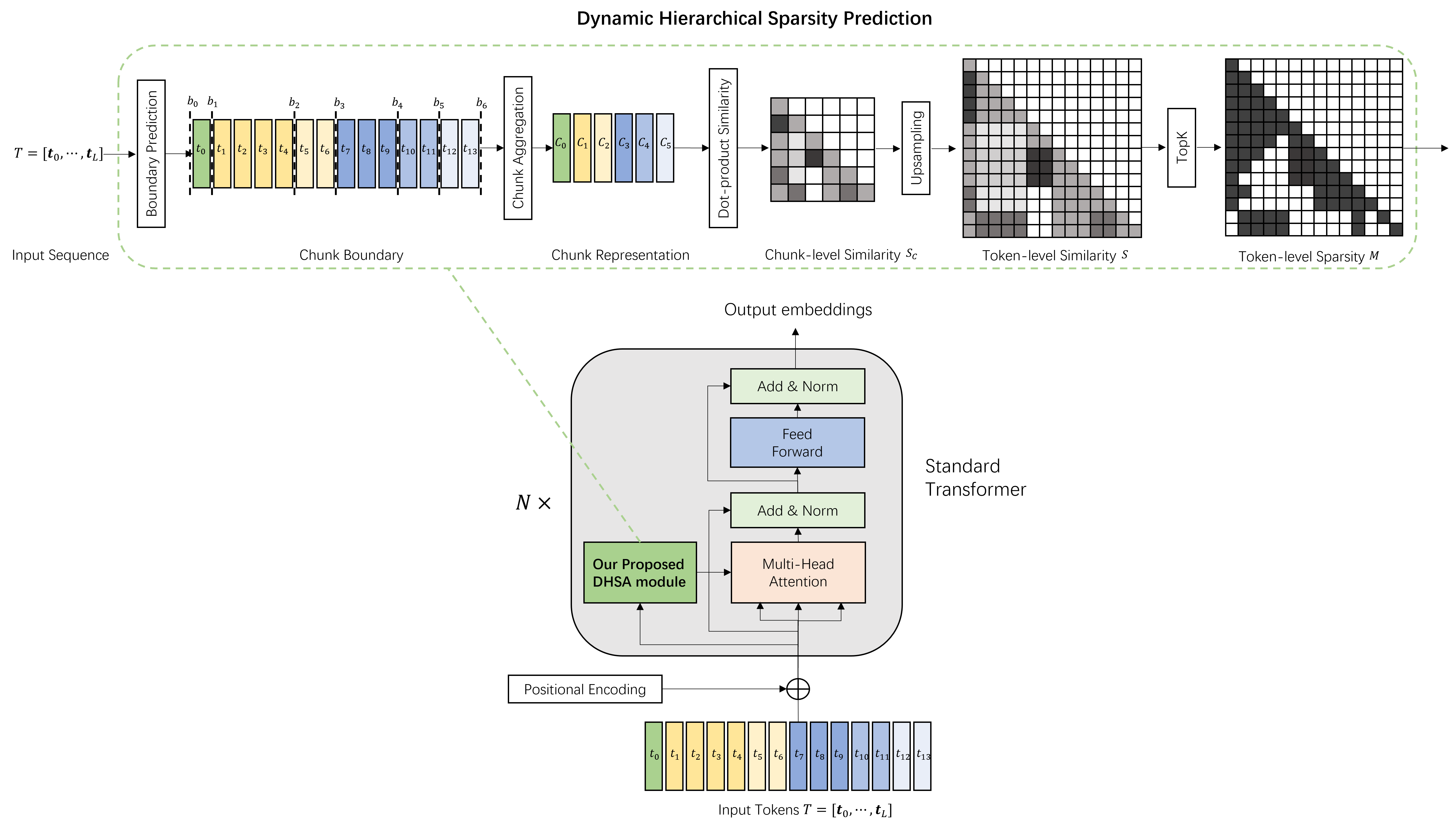
Long-Context Modeling with Dynamic Hierarchical Sparse Attention for Memory-Constrained LLM Inference
Siheng Xiong, Joe Zou, Faramarz Fekri, Yae Jee Cho
DHSA is an efficient sparse attention framework for long-context LLM inference that reduces prefill cost and memory usage while preserving accuracy under tight device constraints.
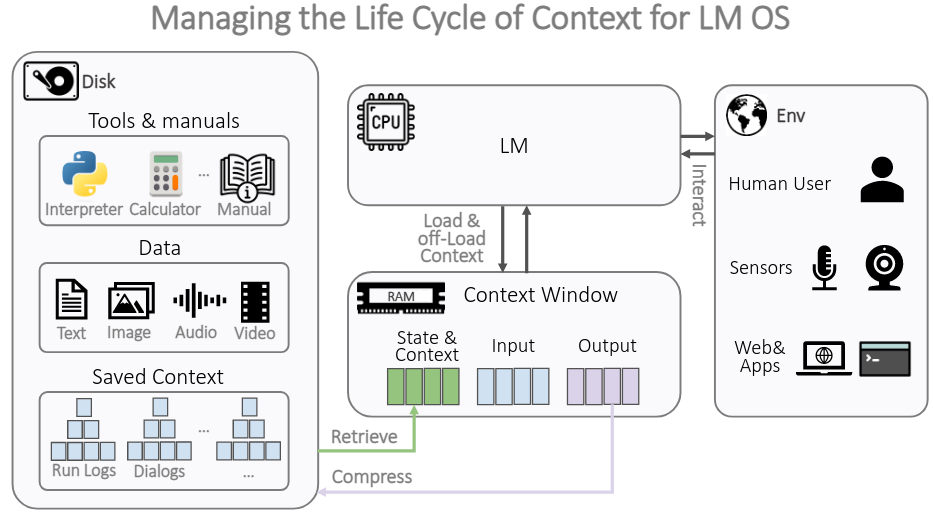
The Compressor-Retriever Architecture for Language Model OS
Yuan Yang, Siheng Xiong, Ehsan Shareghi, Faramarz Fekri
Compressor-Retriever is a model-agnostic architecture for lifelong context management in LLM-based systems, using the base model’s forward pass to compress and retrieve memory while remaining fully differentiable.
Selected Publications
Conference Papers
EMNLP 2026Adaptive Information Control for Search-Augmented LLM Reasoning Siheng Xiong, Oguzhan Gungordu, James C. Kerce, Faramarz Fekri [Repo]ICML 2026(Spotlight) Long-Context Modeling with Dynamic Hierarchical Sparse Attention for Memory-Constrained LLM Inference Siheng Xiong, Joe Zou, Faramarz Fekri, Yae Jee Cho [Repo]ICML 2026Planning through World Model for Automated Heuristic Design via Self-Evolving LLMs Oguzhan Gungordu, Siheng Xiong, Faramarz Fekri [Repo]ICLR 2026Enhancing Language Model Reasoning with Structured Multi-Level Modeling Siheng Xiong, Ali Payani, Faramarz Fekri [Repo]ACS 2025Deliberate Planning in Language Models with Symbolic Representation Siheng Xiong, Zhangding Liu, Jieyu Zhou, Yusen Su [Repo]ACL 2025 (main)Deliberate Reasoning in Language Models as Structure-Aware Planning with an Accurate World Model Siheng Xiong, Ali Payani, Yuan Yang, Faramarz Fekri [Repo]NAACL 2025 (main)CausalEval: Towards Better Causal Reasoning in Language Models Longxuan Yu*, Delin Chen*, Siheng Xiong*, Qingyang Wu, Dawei Li, Zhikai Chen, Xiaoze Liu, Liangming Pan [Repo]EMNLP 2024Can LLMs Reason in the Wild with Programs? Yuan Yang, Siheng Xiong, Ali Payani, Ehsan Shareghi, Faramarz Fekri [Repo]IJCAI 2024Temporal Inductive Logic Reasoning over Hypergraphs Yuan Yang, Siheng Xiong, Ali Payani, James C Kerce, Faramarz Fekri [Repo]ACL 2024 (main)Large Language Models Can Learn Temporal Reasoning Siheng Xiong, Ali Payani, Ramana Kompella, Faramarz Fekri [Repo]ACL 2024 (main)Harnessing the power of large language models for natural language to first-order logic translation Yuan Yang, Siheng Xiong, Ali Payani, Ehsan Shareghi, Faramarz Fekri [Repo]AAAI 2024(Oral) TEILP: Time prediction over knowledge graphs via logical reasoning Siheng Xiong, Yuan Yang, Ali Payani, James C Kerce, Faramarz Fekri [Repo]ICLR 2023TILP: Differentiable learning of temporal logical rules on knowledge graphs Siheng Xiong, Yuan Yang, Faramarz Fekri, James Clayton Kerce [Repo]
Workshop Papers
ICLR 2026 @ SPOTScaling Search-Augmented Reasoning Agents via Adaptive Information Control Siheng Xiong, Oguzhan Gungordu, James C. Kerce, Faramarz Fekri [Repo]NeurIPS 2025 @ ERLong-Context Modeling with Dynamic Hierarchical Sparse Attention for On-Device LLMs Siheng Xiong, Joe Zou, Faramarz Fekri, Yae Jee Cho [Repo]
Preprints
Preprint 2026DIVE: Unlocking Self-Improvement in Frozen Language Models Through Diversity-Driven Skill Evolution Siheng Xiong, Ali Payani, Oguzhan Gungordu, Faramarz Fekri [Repo]Preprint 2026EPOCH: Coverage-Aware Evolution with Experiential Preference Optimization for LLM-based Automated Heuristic Design Oguzhan Gungordo, Ayse Tursucular, Siheng Xiong, Faramarz Fekri [Repo]Preprint 2026Evaluator-in-the-Loop Monte Carlo Tree Search via LLM Agents for Motif Scaffolding in Protein Design Haotian Hu, Oguzhan Gungordo, Siheng Xiong, Faramarz Fekri [Repo]Preprint 2026MOSAIC: Adversarial Co-evolution of Specialist Heuristics and Problem Instances for LLM-based Automated Heuristic Design Oguzhan Gungordu, Siheng Xiong, Faramarz Fekri [Repo]Preprint 2025Enhancing Long Chain-of-Thought Reasoning with Multi-Path Planning with Aggregation Siheng Xiong, Ali Payani, Faramarz Fekri [Repo]Preprint 2024The Compressor-Retriever Architecture for Language Model OS Yuan Yang, Siheng Xiong, Ehsan Shareghi, Faramarz Fekri [Repo]
Experience
- 2026.07 - Present, Applied Scientist, Amazon Web Services, Santa Clara, California
- 2021.09 - 2026.06, Graduate Research Assistant, Georgia Institute of Technology, Atlanta, Georgia
- 2025.05 - 2025.08, Applied Research Intern, Google, Sunnyvale, California
- 2023.09 - 2024.04, Research Intern, Cisco Research, San Jose, California
- 2020.05 - 2021.01, Research Assistant, Rutgers University (Mentor: Dimitris N. Metaxas), New Brunswick, New Jersey
Education
- Georgia Institute of Technology, Ph.D. in Machine Learning (Advisor: Faramarz Fekri)
- Shanghai Jiao Tong University, M.S. in Electrical and Computer Engineering
- Xi’an Jiaotong University, B.S. in Electrical and Computer Engineering
Honors and Awards
- Georgia Tech CSIP Outstanding Research Award
- China National Scholarship (Top 1% Rank)
Services
- Area Chair for ACL Rolling Review
- Program Committee for AAAI, IJCAI, CIKM
- Conference Reviewer for NeurIPS, ICML, ICLR, ACL, EMNLP, KDD, WWW, AAAI, IJCAI, NAACL, EACL, CIKM, ECML
- Journal Reviewer for TMLR, ACM TIST